
Views: 0 Author: Site Editor Publish Time: 2026-09-22 Origin: Site


Matching a fragrance product to a vehicle requires a basic volume equation. A product designed for a 100-cubic-foot compact car will fail completely in a 400-cubic-foot SUV. Airflow behaves differently across varying interior spaces. You must account for these physics before making a purchase.
Selecting the wrong Can Air Freshener Size carries immediate consequences for your daily commute. An oversized unit creates an overpowering, headache-inducing cabin environment. Conversely, an undersized unit delivers a negligible scent throw. Weak performance forces you into premature replacements, wasting your money.
This guide provides a straightforward framework for solving this problem. We will evaluate vehicle cabin volume against fragrance capacity, material type, and lid adjustability. You will learn how to balance these factors. The goal is to maximize your purchase ROI and maintain a consistently fresh interior.
Size-to-Volume Ratio: Standard 1.5–2.5 oz cans are engineered for compacts and sedans; three-row SUVs and trucks require larger capacities (4+ oz) or strategic multi-can deployment.
Material Matters: An organic can air freshener (using scented fiber pads) behaves differently in size-to-lifespan ratios compared to gel-based alternatives.
Adjustability is Key: An adjustable can air freshener mitigates the risk of buying a "too large" size by allowing users to throttle scent intensity based on seasonal temperatures.
Placement Dictates Performance: Stowing a large can under a seat requires a higher ambient scent throw than a smaller can placed in a center console cup holder.
Understanding the physics behind a can air freshener ensures optimal performance. Fragrance molecules require physical airspace to diffuse properly. The interior size directly dictates the necessary evaporation rate.
Every vehicle contains a specific volume of trapped air. Compact cars hold roughly 85 to 100 cubic feet. Large SUVs easily exceed 150 cubic feet. Evaporation rates must scale alongside this physical airspace. A small capacity unit simply lacks the surface area to fill a massive cabin. The molecules disperse too thinly. You will barely notice the fragrance from the driver's seat. Conversely, high-capacity units flood small cabins rapidly. They release too many molecules into a confined area.
Every scent product operates within baseline limits. We call this the saturation threshold. Over-sizing a product in a small space causes immediate olfactory fatigue. Your nose effectively "turns off" to block the overwhelming odor. You might think the scent faded, but your senses just became numb. Under-sizing in a large space creates a different issue. The fragrance disperses too quickly into the ambient air. Users often assume they bought a defective product. In reality, they simply misjudged the required capacity.
Heat dramatically alters evaporation rates. Summer temperatures accelerate scent release significantly. High heat temporarily compensates for a smaller capacity unit. The extreme temperatures force more fragrance oil into the air. However, this spike drastically reduces overall lifespan. A unit rated for 30 days might dry out in just ten days. Winter weather causes the opposite effect. Cold air suppresses vapor pressure. You might need a larger capacity just to maintain a baseline fragrance during freezing months.
We developed a standard sizing framework based on automotive industry interior volume classes. Match your vehicle type to the corresponding capacity for ideal results.
Vehicle Sizing and Deployment Reference Chart
Vehicle Class | Approx. Volume | Ideal Capacity | Deployment Strategy |
|---|---|---|---|
Compact & Coupes | 85 - 100 cu ft | 1.5 oz - 2.5 oz | Single unit, partially closed lid initially. |
Mid-Size Sedans | 100 - 130 cu ft | 2.5 oz - 3.0 oz | Single unit, central placement for airflow. |
Large SUVs & Trucks | 150+ cu ft | 4.0 oz+ (or 2 units) | Multi-unit placement (front and rear). |
Compact cars require minimal fragrance output. The ideal capacity remains between 1.5 and 2.5 ounces. You only need a single unit. Small cabins trap air very effectively. Air conditioning systems circulate this trapped air rapidly. Large capacity cans are entirely unnecessary here. They almost always overpower the driver.
Best Practice: Keep the container partially closed for the first 14 days. Limit the initial evaporation rate. This simple trick prevents headaches while doubling the product lifespan.
Mid-size vehicles require slightly more robust diffusion. Standard 2.5-ounce units work perfectly. You can also upgrade to a medium 3.0-ounce capacity. The deployment logic shifts slightly here. You need consistent airflow to distribute the fragrance properly. Placing it in the front console helps.
The air travels from the front dashboard to the rear passenger seats. Expose the fragrance material fully after the first week. This ensures the scent reaches the rear cabin effectively.
Massive cabins demand serious fragrance power. You should look for Jumbo sizes exceeding 4.0 ounces. Alternatively, you can utilize a multi-unit strategy. A single standard unit suffers from severe "scent decay." The fragrance dissipates long before reaching the third row.
Implementation Risk: Relying on one oversized unit in the front can overwhelm the driver. Instead, place one standard unit under the driver's seat. Place a secondary standard unit in the rear cargo area. This balances the distribution beautifully.
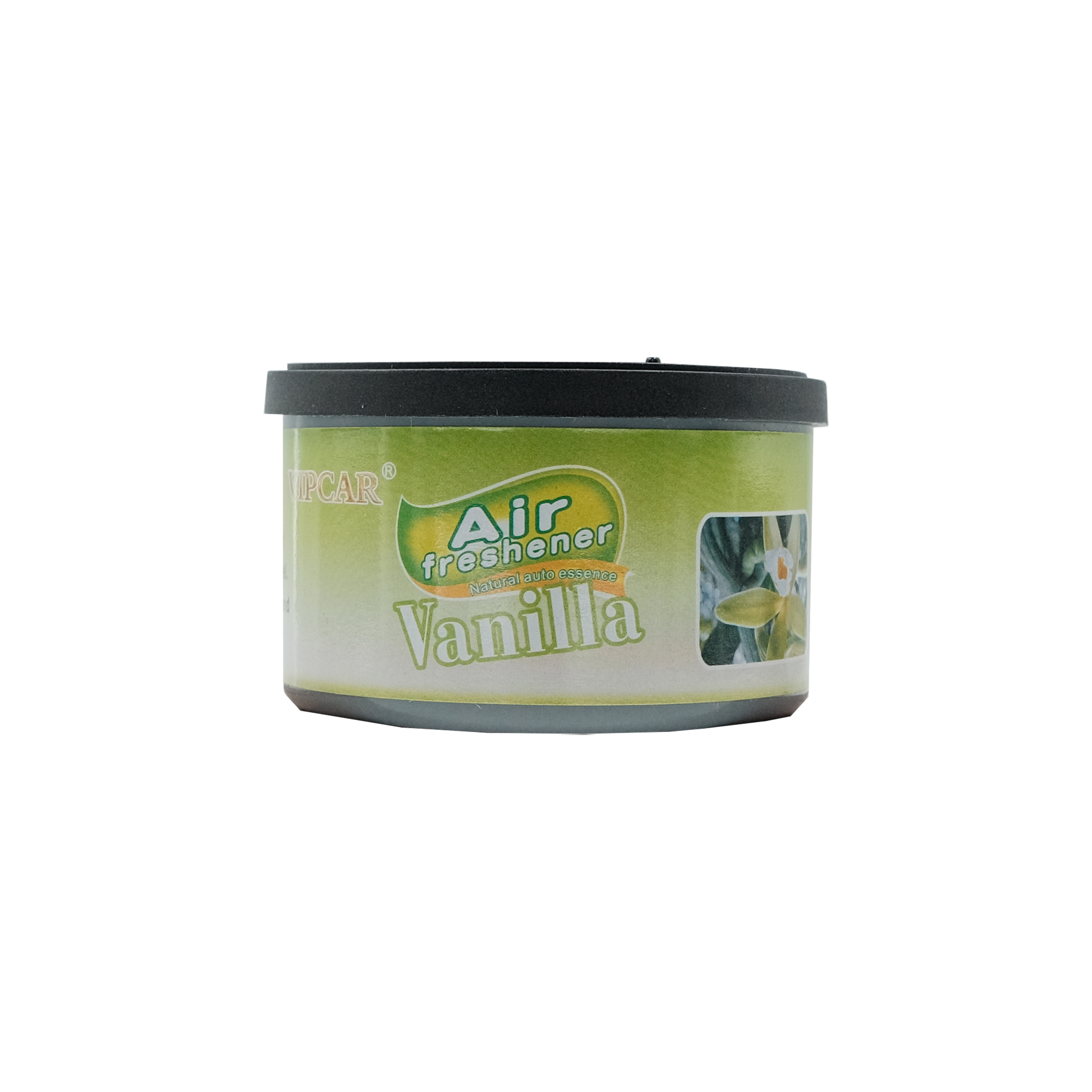
Lid mechanics play a massive role in fragrance longevity. Buyers often overlook this crucial feature. The style of the lid directly controls the evaporation speed.
Standard pull-top varieties release fragrance at a fixed rate. Once you peel back the metal seal, the material faces full exposure. The size you buy dictates the initial peak intensity. You cannot slow down the process. Hot weather will cause rapid depletion. If the initial smell proves too strong, you have no way to reduce it. You simply must wait for it to fade naturally.
Upgrading to an adjustable can air freshener solves these fixed constraints. These products feature a specialized vented cap. You can rotate this plastic cover to open or close the ventilation slots. This simple mechanical feature transforms how the product operates. You gain manual control over the ambient concentration.
Buying a larger adjustable capacity unit usually proves more cost-effective. A small fixed unit might cost less initially. However, it dies out quickly. An oversized adjustable unit offers better value. You can dial down the vents significantly in a small car. This extends the lifespan out to 60 days or more. You get the longevity of a massive unit without overwhelming your compact cabin.
The interior compound dictates how the fragrance releases over time. Different materials behave differently as they age. You must choose the right compound for your specific vehicle environment.
An organic can air freshener utilizes biodegradable fiber pads. Manufacturers soak these dense pads in concentrated fragrance oil. They hold liquid securely without pooling. They are completely spill-proof. This makes larger sizes much safer to store loosely under seats. You never have to worry about harsh chemicals staining your floor mats. The biodegradable nature also provides peace of mind for eco-conscious consumers.
Gel varieties offer a strong initial punch. The gelatinous material shrinks visibly as it evaporates. This provides a helpful visual indicator of its remaining lifespan. However, gels carry inherent risks in larger sizes. Extreme summer temperatures can liquefy the gel temporarily. This poses a slight melting or spill risk if the unit tips over. Liquid hybrids share this exact vulnerability. They require upright stabilization at all times.
Material density impacts the physical footprint. Organic fiber pads generally require a larger housing. They need more surface area to achieve the same initial throw as high-volatility gels. However, organic pads offer a much more stable experience. They deliver a linear, consistent release over time. Gels tend to spike sharply in heat and drop off rapidly. Fiber pads maintain a steady ambient scent for weeks.
Where you place the unit matters just as much as its capacity. Poor placement ruins excellent products. A premium car air freshener requires proper airflow to function.
Center console cup holders work perfectly for small to standard capacities. The central location leverages the dashboard AC vents. The air pulls the fragrance into the main cabin area.
Caution: Ensure the unit does not block larger beverage containers. A jumbo unit will consume the entire space. This creates an immediate annoyance for the driver.
The space beneath the front seats serves as an ideal hiding spot for large capacities. It keeps the bulky container out of sight.
Risk factor: You must ensure the container remains fully secured. An unsecured unit might roll forward beneath the brake pedal. This presents a severe safety hazard.
Follow these steps for safe under-seat installation:
Select an organic, spill-proof pad format. Do not use gels here.
Locate the rear floorboard AC vents beneath the driver seat.
Place the unit slightly behind the vent output.
Use a small strip of double-sided adhesive tape to anchor the base to the carpet.
Verify the unit cannot slide forward during heavy braking.
Floorboard foot-vents distribute fragrance rapidly without causing vehicle wear. Vent clips often damage fragile plastic louvers. Some liquids leak from vent clips and destroy expensive dashboard screens. Placing a floor unit near the bottom vents eliminates these risks entirely. The floor vents push the molecules upward naturally. This fills the cabin efficiently while protecting your interior trim.
Selecting the right capacity requires a simple evaluation of your vehicle. Rely on this decision matrix: Choose standard capacities (1.5–2.5 oz) for compacts and standard sedans. If you drive a large SUV or truck, evaluate your layout. You can either upgrade to a jumbo 4 oz+ size or buy two standard units for dual placement.
Always default to an adjustable lid variety when uncertain. It provides a reliable safety net. You can manually control the intensity. This ensures maximum longevity regardless of your cabin dimensions.
Review your vehicle's cabin class today. Determine your preferred placement location, whether a cup holder or under the seat. Finally, select a spill-proof organic formulation to begin testing your new scent strategy.
A: Expect a baseline lifespan of 30 to 45 days. In larger cabins, the perceived scent fades faster. The ambient concentration drops quickly as the air circulates. Even if the internal fiber pad still contains fragrant oil, you might stop noticing it around week four.
A: Two smaller units placed at opposite ends of the cabin work best. This provides highly even scent distribution. A single large unit heavily concentrates the odor in one specific spot, which can easily overwhelm the closest passenger while leaving the back rows completely unfragranced.
A: The sealed shelf life remains identical across all capacities, typically lasting one to two years. However, larger organic units contain more mass to hold oils. This generally extends their active use lifespan by 15-20% compared to smaller counterparts once opened.
A: Most 1.5 to 2.5 oz capacities feature a universal diameter of roughly 2.5 inches. They fit easily into standard cup holders. Jumbo varieties (4 oz+) frequently exceed standard dimensions. They will require under-seat or door-pocket placement to sit flat.


