
Views: 0 Author: Site Editor Publish Time: 2026-08-11 Origin: Site


We all know the frustrating cycle of buying a new fragrance for our vehicle or closet. You peel back the foil, and for three days, the scent is completely overwhelming. Then, seemingly overnight, the fragrance vanishes entirely. You are left holding a useless piece of plastic.
This rapid drop-off in performance usually happens because we misunderstand a crucial design element. The vented, adjustable lid on a can air freshener is not just a packaging feature. It actually serves as a highly precise mechanical throttle for passive scent diffusion.
Today, we will explain the physics behind adjustable air freshener lids. We will explore how different interior core materials respond to airflow dynamics. By the end, you will know exactly how to evaluate and operate these units. You can finally achieve predictable, long-lasting scent control.
Diffusion mechanics: Adjustable lids control the active surface area exposed to ambient air, directly dictating evaporation rates.
Material matters: The effectiveness of lid control varies heavily depending on whether the core is a shrinking gel, a solid block, or an organic can air freshener utilizing fiber pads.
Lifecycle management: Gradually opening the lid over 30-60 days prevents premature evaporation and combats user "nose blindness."
Environmental factors: Heat and ambient airflow (especially in vehicles) require stricter lid management to prevent rapid scent depletion.
To master fragrance longevity, you must first understand how scents move through the air. You do not need a degree in chemistry to grasp this. It comes down to basic fluid dynamics and thermal energy.
Fragrance oils naturally evaporate at room temperature. The canister essentially acts as a localized holding tank. It traps concentrated vapor inside its walls. The liquid or solid fragrance core constantly releases microscopic scent molecules. When you keep the canister sealed, the internal air reaches maximum saturation. Evaporation pauses because the air inside cannot hold any more vapor.
Think of the adjustable lid as a camera aperture. It controls exactly how much vapor escapes into your room or vehicle. A wider opening allows ambient air currents to enter the canister. These air currents sweep away the accumulated vapor. This sweeping action forces the core material to release more scent molecules. It accelerates the rate at which essential oils transition from liquid to gas. By keeping the vents mostly closed, you slow this transition down. You effectively throttle the output.
Heat acts as an invisible engine for evaporation. Elevated temperatures naturally speed up the release of fragrance molecules. On a hot summer afternoon, an exposed fragrance core will deplete rapidly. The adjustable lid provides a necessary physical barrier to counteract these heat spikes. When temperatures rise, closing the vents restricts the escaping vapor. This simple adjustment preserves your product during extreme weather conditions.
Not all fragrance cores behave the same way under an adjustable lid. The physical state of the scent material dictates how well you can control it over time. Buyers typically choose between two main categories: shrinking gels and stable fiber pads.
Water-based gels remain very popular for household use. They rely on a mixture of water, fragrance oils, and gelling agents. They evaporate and physically shrink over time. This physical transformation creates a unique problem for scent management.
As the gel shrinks away from the lid, internal airflow dynamics change completely. The distance between the vents and the fragrance source increases. Eventually, the gel block becomes a tiny, hardened puck at the bottom of the canister. At this stage, lid adjustments become virtually useless. The ambient air cannot effectively reach the recessed gel to sweep away the vapor.
Modern solutions utilize compressed, biodegradable fiber pads. Manufacturers soak these pads in highly concentrated fragrance oil. This design is commonly found in a high-quality organic can air freshener.
The physical size of the pad remains constant throughout its lifespan. It never shrinks or retreats from the vents. This means the adjustable lid provides exact, linear control over scent throw from day one to day sixty. The air currents always hit the pad at the same angle. They make these units highly predictable for commercial spaces or continuous home use. You get exactly the amount of fragrance you dial in.
Feature | Water-Based Gel Blocks | Organic Fiber Pads |
|---|---|---|
Physical State Over Time | Shrinks and hardens | Retains original size and shape |
Lid Control Effectiveness | Decreases rapidly after 14 days | Linear and exact for up to 60 days |
Environmental Impact | Often contains synthetic polymers | Biodegradable and eco-friendly |
Spill Risk | Can melt in extreme heat | Leak-proof; oils are trapped in fibers |
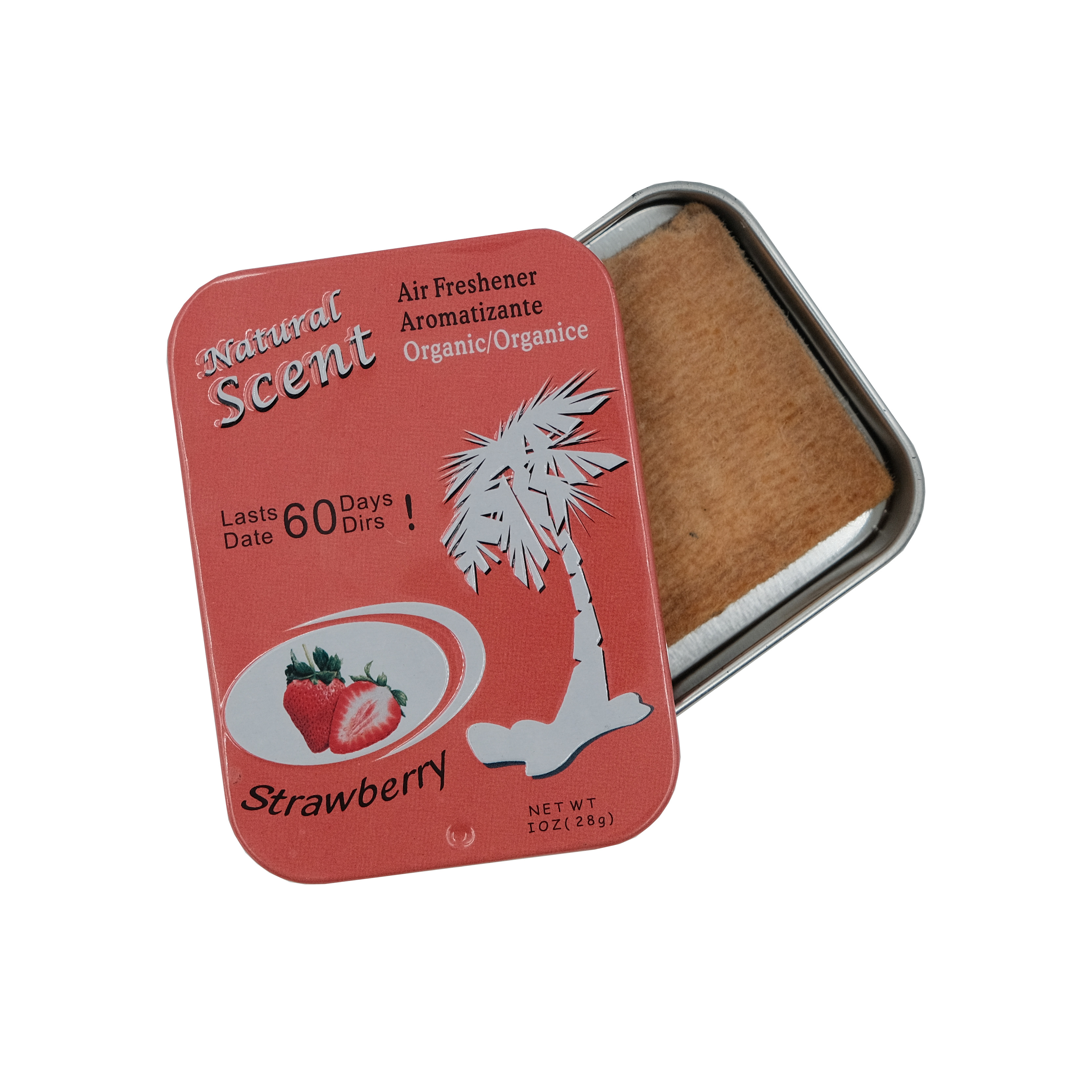
Buying a great product is only half the battle. How you operate it determines your ultimate satisfaction. Most people rip the foil off entirely and open the vents to the maximum setting. This rookie mistake burns through volatile top notes instantly. It also triggers olfactory fatigue, commonly known as nose blindness.
To maximize longevity and combat sensory adaptation, you should follow a strict phased management schedule.
Days 1–7 (The Priming Phase): The concentration of surface oils is at its absolute highest. The scent will easily overwhelm a small space. Keep the vents just 10% to 20% open. This prevents overpowering the room and stops you from wasting the product during its most potent stage.
Days 8–21 (The Plateau): Surface oils slowly begin to evaporate. The initial intensity will drop slightly. At this point, open the vents to roughly 50%. This adjustment increases airflow to maintain a consistent baseline scent profile. You will not notice a drop in performance.
Days 22–60 (The Depletion Phase): The deeply trapped oils now require maximum airflow to evaporate. Open the vents fully. The wide aperture allows ambient currents to reach the center of the core.
Pro-Tip (Implementation Reality): Organic pads offer a unique advantage late in their lifecycle. At the 30-day mark, physically open the canister and rotate the internal pads. Turn them upside down. This exposes trapped, unevaporated oils directly to the airflow. It instantly renews the fragrance intensity without requiring a new can.
Vehicles present the toughest challenge for passive scent diffusion. A car interior is essentially a greenhouse. It amplifies every environmental variable that accelerates evaporation.
A vehicle interior experiences extreme, rapid temperature swings. A dashboard can easily exceed 130°F (54°C) in direct sunlight. These extreme thermal spikes cause rapid, uncontrolled fragrance release. If you leave your lid fully open on a summer day, the heat will boil off the fragrance oils. You could ruin a 60-day product in a single weekend.
Where you place the canister dictates how you should set the lid. Strategic placement prevents premature burnout.
Direct Airflow (Cup holders near vents): Placing the canister here exposes it to aggressive blasts from your AC or heater. This high-velocity air strips vapor away rapidly. You must keep the lid nearly closed to prevent a 48-hour burnout.
Indirect Airflow (Under the seat): This is the optimal placement for longevity. It relies on the vehicle's general air circulation rather than a direct fan blast. You can allow for a wider lid opening here. The scent diffuses gently throughout the cabin.
Extreme heat can cause inferior products to melt or leak. Choosing a high-quality car can air freshener with a secure, locking lid mechanism is vital. A locking lid prevents accidental oil spills during sharp turns. This protects your expensive interior plastics and upholstery from permanent chemical damage.
Not all adjustable lids deliver on their promises. Many feature flimsy plastics that fail under heat or vibration. When evaluating brands, you must look past the colorful packaging. Focus on mechanical reliability and chemical safety.
The lid should offer noticeable physical resistance when twisted. This friction is a sign of tight manufacturing tolerances. Loose lids will vibrate open or closed while you drive. A lid that cannot hold its position defeats the entire purpose of scent control. Test the dial before buying. It should feel stiff and secure.
Indoor air quality matters. You breathe these vaporized oils every day. Ensure the manufacturer explicitly lists adherence to CARB (California Air Resources Board) standards. Alternatively, look for IFRA (International Fragrance Association) guidelines. These certifications guarantee the manufacturer avoids harmful heavy chemical propellants.
We often fall into the trap of buying the cheapest option on the shelf. Cheaper, non-adjustable fresheners may cost less upfront. However, they usually require replacement every 14 days. They offer no throttle control and burn out rapidly. A slightly pricier can with a functional lid and an organic core extends the replacement cycle to 60 days. This significantly lowers your long-term costs and reduces plastic waste.
Evaluation Metric | What to Avoid | What to Require |
|---|---|---|
Lid Mechanism | Loose, freely spinning dials | High-friction, locking vents |
Core Material | Water-based shrinking gels | Biodegradable organic fiber pads |
Safety Certifications | No regulatory markings | CARB compliant or IFRA certified |
Expected Lifespan | 14 to 21 days | Up to 60 days with adjustment |
A can air freshener’s true value is largely dictated by your active management of the lid. By understanding passive diffusion, you can stop wasting money on products that burn out in three days. The vented lid is your ultimate tool for extending fragrance lifespans.
We strongly recommend organic fiber cans featuring high-friction adjustable lids. They offer the best solution for buyers prioritizing scent consistency, product longevity, and environmental safety. They do not shrink, they do not leak, and they respond perfectly to airflow adjustments.
Take a moment to audit your current scent control strategy. Stop peeling the foil entirely off on day one. Consider upgrading to adjustable, long-duration formats. Follow the phased adjustment schedule to keep your spaces smelling fresh for two straight months.
A: This is usually caused by "Olfactory Fatigue" or nose blindness. Your brain stops perceiving the constant scent, but new visitors will still smell it. Furthermore, fully opening the lid on day one burns through all the volatile top notes instantly. Keep the vents mostly closed during the first week.
A: Adding water temporarily works for shrinking water-based gels, but it introduces serious mold risks. It does not work at all for oil-based organic fiber pads. Instead of adding water, simply rotate the internal fiber pads to expose fresh oils to the airflow.
A: Yes, provided you utilize the adjustable lid to restrict the output. Small cubic footage requires very little vapor for full coverage. You must also ensure the specific brand you purchase is VOC-compliant and completely free of heavy chemical propellants.


