
Views: 0 Author: Site Editor Publish Time: 2026-07-08 Origin: Site


Moving a digital concept to a physical, scented product requires navigating specific manufacturing variables. Substrate absorbency and die-cut limitations play a massive role in the final result. You might be sourcing promotional merchandise for an event. Alternatively, you might be launching an e-commerce product line for your followers. In either case, choosing the right production partner matters immensely. Your success hinges directly on understanding their proofing, printing, and scent-application capabilities. A small mistake in file preparation can ruin an entire production run. Ink can bleed, shapes can tear, and fragrances can fade prematurely. This guide breaks down the end-to-end production workflow in detail. We will establish objective criteria to help you evaluate vendors and manage lead times effectively. By following these steps, we ensure the final physical sample aligns exactly with your initial design brief.
Artwork translation: Printing on porous cellulose paper behaves differently than digital screens; high-contrast, 300-DPI designs are mandatory to prevent ink bleeding.
Scent realism: Fragrance longevity is dictated by oil concentration and packaging seals, with realistic lifespans ranging from 1 to 3 weeks once opened.
Production routing: Print-on-Demand (POD) models offer zero-inventory scaling for creators, while traditional bulk manufacturing significantly improves unit margins for corporate promotions.
Sample validation: Always request a physical or high-fidelity digital proof to verify die-cut borders, color accuracy, and scent load before approving full production.
Aligning your end goal with the correct manufacturing tier saves time and money. We must frame the business problem first. Are you creating items for corporate giveaways, or are you building a distinct retail brand? The answers dictate your production strategy.
Car dealerships, real estate agents, and event coordinators often require bulk merchandise. A custom logo air freshener serves as an excellent, low-cost billboard. Here, cost-per-unit drives the purchasing decision. You need strict brand color matching to maintain corporate identity. Highly efficient bulk packaging helps distribute the items quickly at trade shows. These buyers prioritize aggressive volume discounts over complex, multi-layered fragrance blends. Standard shapes like circles and squares usually suffice.
Artists, influencers, and boutique owners usually want a personalized car air freshener. The focus shifts entirely to unique die-cut shapes and premium fragrance options. Retail-ready header cards elevate the unboxing experience. You are selling a lifestyle product, not just a scent. Buyers expect high-fidelity artwork reproduction. They want bespoke aromas matching their brand persona.
Minimum Order Quantities (MOQs) directly impact your unit economics. You must calculate your cash flow before committing.
High Volume Vendors: Some factories require orders of 500 or more units. This lowers the cost per piece dramatically. It requires more upfront capital.
Low Volume Providers: Low-MOQ or one-off personalized providers charge a premium per item. They allow maximum flexibility for small brands. However, they severely squeeze your profit margins.
We must address how glowing screen images translate to physical, textured paper. Printing on absorbent stock alters visual dynamics drastically. Preparing files correctly prevents costly reprints.
You must provide 300 DPI images in CMYK color format. This standard remains entirely non-negotiable. Digital screens use RGB light to display vibrant colors. Printers use CMYK ink to replicate them. Glossy paper holds ink sharply on the surface. Absorbent cotton paper lets ink seep deep into its fibers. Expect minor color shifts during this absorption process. High contrast prevents overlapping elements from turning muddy. Avoid using tiny, delicate fonts. They often blur when the ink spreads outward.
Modern vendors offer different proofing experiences based on their target audience.
Interactive Tools: Live crop and real-time 3D preview tools help consumers finalize quick orders. They verify simple photo alignments instantly. These automated systems work well for basic shapes and solitary images.
Manual Pre-Press: Manual proofing requires a dedicated design team. You absolutely need human oversight for complex, multi-layered brand artwork. Experienced technicians adjust vectors to account for printer dot gain. They manually trap colors to prevent unsightly white gaps.
Every custom shape requires a physical or digital die-line. You must establish strict safe zones for all critical text. Keep essential typography at least an eighth of an inch away from the cutting edge. Custom shapes directly impact the structural integrity of the paper. Intricate cuts or narrow appendages can tear easily. The paper becomes quite heavy and fragile when thoroughly soaked in fragrance oils.
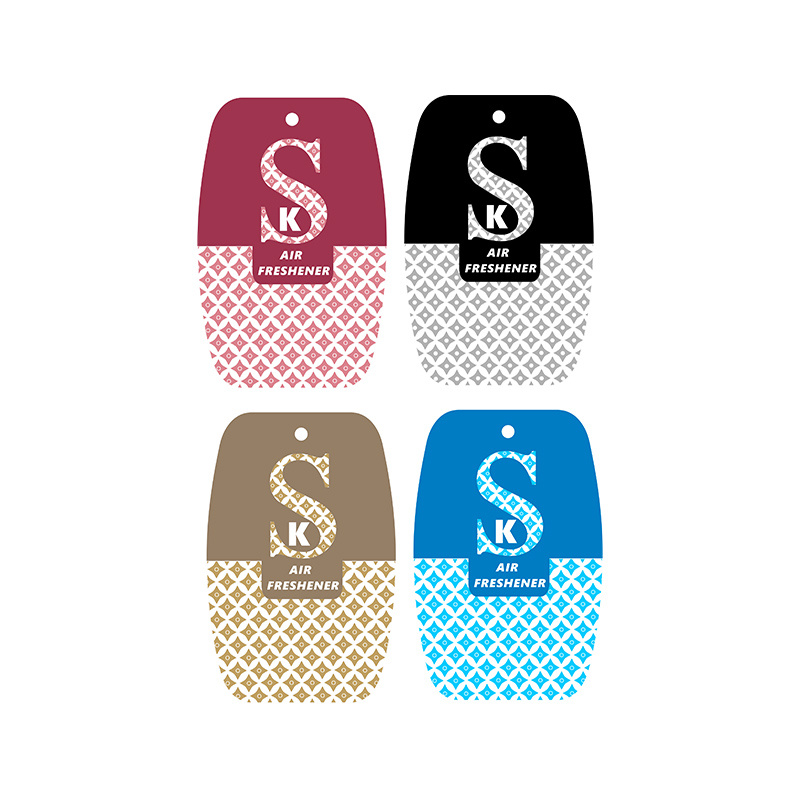
The physical feel and smell of the product determine its perceived value. We must scrutinize both the base material and the fragrance method carefully. Cutting corners here destroys customer trust.
Assess the thickness and density of the cotton paper or cellulose block. Standard boards run around 2mm thick. Thicker boards naturally hold more oil. This extends the lifespan of the fragrance. However, they increase the individual shipping weight slightly. A denser board resists warping much better after heavy oil application. Flimsy paper curls at the edges when hung from a rearview mirror.
Manufacturers generally use two primary methods to add fragrance to the raw substrate. Understanding these methods sets realistic customer expectations.
Surface-Sprayed Scents: Vendors spray a light mist of oil onto the finished, printed card. These flash off very quickly in a hot vehicle. They suit cheap promotional runs perfectly.
Deep-Soaked Infusion: The printed paper rests in an oil bath until fully saturated. This provides a longer-lasting, highly consistent release. Premium brands demand this method.
Transparency Note: Set realistic expectations for your buyers upfront. No paper product lasts for several months. Standard performance curves show a strong initial throw. The scent then tapers off steadily over 7 to 21 days depending on cabin temperature.
Application Method | Process Description | Longevity Profile | Best Use Case |
|---|---|---|---|
Surface Spray | Light mist applied after printing phase | High initial throw, fades rapidly (3-7 days) | Budget promotions, quick event giveaways |
Deep Infusion | Paper submerged completely in fragrance oil | Steady release, lasts moderately (1-3 weeks) | Retail brands, premium e-commerce catalogs |
Ensure the vendor uses safe, non-toxic oils. Request documentation confirming IFRA (International Fragrance Association) compliance. This protects consumers from harsh allergens often found in cheap synthetic blends. It also protects your brand from liability issues. Avoid vendors refusing to disclose their basic safety certifications.
Choosing the right fulfillment strategy shapes your operational workload entirely. You must decide how much capital to deploy upfront versus paying per piece. Let us compare the two dominant models.
Print-on-Demand allows creators to sell items without holding physical stock in a warehouse.
Pros: This route eliminates inventory risk completely. Automated API routing handles order processing instantly through platforms like Shopify. It offers the ideal testing ground for unproven artistic designs.
Cons: You will pay a significantly higher cost-per-unit. Vendors heavily limit custom shapes to standard circles, squares, or rectangles to maintain automation speeds. Scent offerings remain highly standardized.
Traditional manufacturing requires ordering thousands of units at once to achieve economies of scale.
Pros: Bulk orders yield the absolute lowest unit cost. You gain access to highly customizable retail packaging. You can request bespoke scents and highly unique die-lines.
Cons: It requires significant upfront capital investment. Lead times stretch typically between two to four weeks. You must manage inventory storage, climate control, and shipping logistics yourself.
Map your customer acquisition cost (CAC) against your desired profit margins. If CAC runs high, POD margins might barely break even. Bulk models offer the financial padding necessary for aggressive advertising spend. Review the summary chart below to match your business stage.
Business Model | Upfront Capital | Profit Margin Potential | Customization Level | Inventory Risk |
|---|---|---|---|---|
POD / Dropshipping | Low ($0 setup) | Low to Moderate | Basic (Standard shapes only) | None |
Bulk Manufacturing | High ($500+ minimum) | High | Advanced (Unique dies, custom headers) | High |
Approving a prototype requires intense attention to detail. You must evaluate the sample under real-world conditions. When testing a custom car air freshener, visual appeal and physical durability carry equal weight.
Never approve a massive production run without touching a physical sample. Digital proofs lie about texture and smell.
Visuals: Check carefully for micro-bleeding on fine text. Inspect the borders for rough edges. Verify the color saturation against your Pantone targets under natural daylight.
Hardware: Inspect the quality of the elastic hanging string. Measure its length to ensure it loops easily over a bulky mirror. Tug it firmly to test the attachment security.
Packaging integrity: Look closely at the polybag or cellophane wrapper. It must be completely airtight. Poor seals lead to premature scent evaporation during ocean transit.
Communicate adjustments clearly and professionally to the manufacturer before signing off. You might need to request a higher fragrance load if the sample smells weak. You might notice a sharp corner on the die-cut curling up. Send high-resolution photos of any defect. Document exact measurement changes required for the full run. A good vendor expects and welcomes this feedback. Rushing this stage guarantees expensive mistakes down the line.
A successful product launch balances design fidelity, scent chemistry, and material quality perfectly.
Fulfillment models dictate your operational workflow and long-term profit margins. Choose based on your available capital.
Finalize all design assets in high-resolution CMYK formats immediately to prevent pre-press delays.
Determine your target retail margin to guide the print-on-demand versus bulk manufacturing decision confidently.
Order physical samples from at least two shortlisted manufacturers to verify real-world scent performance before committing.
A: Print-on-demand services offer MOQs of a single unit. Traditional bulk B2B manufacturers typically start at 100 to 500 units. They require higher minimums to amortize printing setup and die-cutting costs effectively across the batch.
A: Scent longevity depends heavily on exposure. Sealed in airtight packaging, they last between one and three years. Once opened in a vehicle, expect the fragrance to last one to three weeks. Climate, humidity, and direct sun exposure drastically affect this timeline.
A: You cannot use copyrighted or trademarked materials without permission. Technical limits also apply. Automatic cropping tools require high-contrast, well-lit photos. Avoid heavy background clutter to ensure the primary subject stands out sharply on the printed board.
A: Print-on-demand setups usually produce items in two to four days. Custom bulk manufacturing runs take 10 to 20 days due to plate creation and soaking times. Always factor in an additional three to seven days for standard transit time.


