
Views: 0 Author: Site Editor Publish Time: 2026-11-23 Origin: Site


Ever opened a new air freshener only to smell absolutely nothing? The effectiveness of a fragrance product is defined by its potency. When scent loss occurs, product value vanishes instantly. Buyers get frustrated. Poor reviews inevitably follow. For manufacturers dealing with aromatic wooden products, preservation is the ultimate engineering challenge. Packaging is not just a decorative box. It acts as the critical barrier between volatile fragrance oils and the external environment. A failed seal means the product arrives at the customer's door completely depleted. In this technical guide, we break down the precise material selections, heat-sealing parameters, and structural designs required to keep your products premium from the factory floor to the rearview mirror.
Sealing is Paramount: The transition from open-air manufacturing to a hermetically sealed environment is the single most critical step in scent retention.
Material Selection: Standard plastics fail to block gas transmission. Specialized multi-layer laminates are required to contain volatile organic compounds.
Customization: Strategic pouch design reinforces brand identity without compromising the airtight barrier.
Quality Control: Calibrated heat-sealing equipment prevents micro-leaks and ensures long-term shelf life.
Conversion Optimization: Reliable barrier performance secures lucrative B2B wholesale contracts and builds long-term distributor trust.
To truly understand why conventional wrapping often fails, we must examine the physical properties of fragrance. Essential oils and synthetic fragrances consist primarily of Volatile Organic Compounds, commonly referred to as VOCs. These chemical compounds possess a exceptionally high vapor pressure at room temperature. They constantly shift from a liquid state inside the wood into a gas in the surrounding atmosphere.
Wood itself is a highly porous and hygroscopic medium. Its intricate cellular structure acts like a natural capillary network. This makes wood an exceptional sponge for absorbing fragrance oils during the OEM production phase. However, it also means the material rapidly surrenders those oils when exposed to open air. Inside a properly sealed pouch, VOCs evaporate until the internal air reaches full saturation. At this exact point, evaporation stops. If the material contains micro-leaks, the gases continuously escape. A hot car interior or a sweltering warehouse accelerates this kinetic energy. High-barrier containment becomes an absolute necessity for product survival.
The core function of Scented Wood Air Freshener Packaging is to halt VOC migration instantly. Many emerging brands choose their wrapping based solely on cost. They utilize standard kraft paper or thin polyethylene. This is a critical engineering failure. Standard polyethylene keeps liquid water out but remains highly permeable to gases. Scent molecules slip right through the loose polymer chains. The product loses its signature aroma within mere weeks.
To build a genuine barrier, manufacturers must specify multi-layer laminate films. Each layer serves a specific mechanical purpose. An outer Polyethylene Terephthalate layer provides structural strength and superior printability. A middle aluminum foil or Ethylene Vinyl Alcohol layer aggressively blocks oxygen and VOCs. An inner Linear Low-Density Polyethylene layer allows for a secure, airtight heat seal.
Material Type | Oxygen Transmission Rate | Scent Barrier Performance | Structural Integrity | Engineering Application |
|---|---|---|---|---|
Standard Kraft Paper | Very High | None | Low | Outer decorative display boxes only |
Single-Layer Polyethylene | High | Low | Moderate | Short-term local transit |
Oriented Polypropylene | Moderate to Low | High | High | Standard retail pouch packaging |
Foil Laminate | Near Zero | Maximum | Very High | Long-term warehouse storage and export |
Balancing clear visibility with robust protection presents a common design challenge. When showcasing intricate designs like a custom rose style wood cut, opaque foil is not an option. High-barrier clear coatings, such as Aluminum Oxide coated films, provide necessary retention while remaining completely transparent.
Within the automotive fragrance sector, the Wood Car Air Freshener OPP Bag remains the industry standard. There is a specific scientific reason for this dominance. OPP stands for Oriented Polypropylene. During manufacturing, the raw film is stretched in specific directions. This deliberate stretching aligns the microscopic polymer chains tightly together. It exponentially increases tensile strength, visual clarity, and vapor barrier properties.
Material selection alone is insufficient. The closure mechanism dictates the final shelf life. A cheap adhesive strip will inevitably fail. Concentrated essential oils act as solvents over time. They dissolve the glue, creating microscopic leak channels. These bags must be hermetically heat-sealed. Heat sealing physically melts the inner polymer layers together. Factory operators must calibrate their equipment precisely. They balance dwell time, temperature, and pressure. A cold seal peels apart easily. A hot seal thins the plastic and creates a brittle failure point.
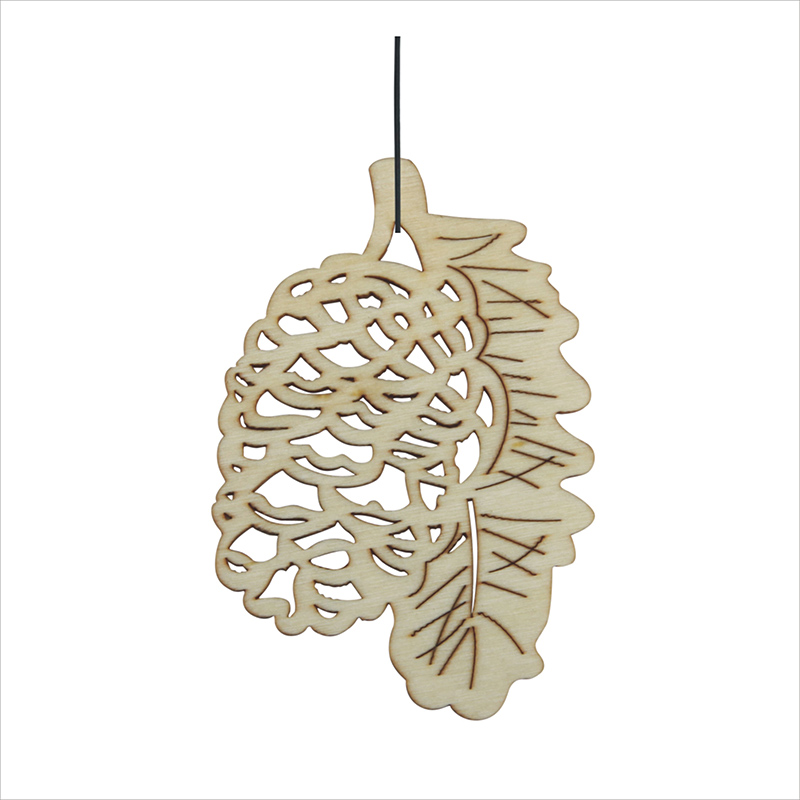
Packaging acts as the silent salesperson. Yet structural integrity must always dictate the final design. Developing Custom Air Freshener Packaging requires a highly strategic approach. Intricate branding elements cannot compromise the airtight seal.
Clients frequently request die-cut windows to display the organic wood grain. Gluing a thin plastic film inside a cardboard box is a flawed approach. The scent rapidly bleeds out through the porous glue line. The correct engineering method utilizes a fully sealed inner pouch housed inside a printed outer carton. Alternatively, engineers can build an unprinted transparent window directly into a fully laminated pouch structure.
Premium finishes matter. Soft-touch matte textures or spot UV gloss signal high quality. A rigid, well-sealed package that does not leak oily residue builds immediate consumer anticipation for a potent fragrance experience.
Recent market data reveals a massive shift in fragrance preservation technology. Global supply chains face extended transit times. Climate conditions fluctuate wildly. Consequently, the demand for resilient, climate-proof wrapping has skyrocketed. We are seeing a strong industry pivot toward advanced mono-material structures. These utilize ultra-thin, bio-based barrier coatings. Forward-thinking brands can now maintain strict VOC containment while meeting modern recycling demands. Furthermore, premium automotive accessory lines are integrating smart indicators. Subtle color-shifting inks verify seal integrity at a glance. This adds an undeniable layer of quality assurance for the end consumer.
Scaling operations introduces entirely new preservation challenges. When submitting a Bulk Wood Air Freshener Inquiry, the professional conversation must go beyond unit price. Technical specifications and shelf-life guarantees are mandatory.
Bulk shipments endure extreme environments. A product might spend weeks inside a sweltering ocean freight container. Elevated temperatures drastically increase the vapor pressure of the infused oils. This severely tests the physical limits of the heat seals. An inadequate barrier leads to pre-opening fatigue. The wooden pieces arrive bone-dry before they even reach the regional distribution warehouse.
Buyers must define required barrier properties during initial negotiations. Request technical data sheets for the proposed films. Conduct accelerated aging tests. Placing sample products in a 45 degrees Celsius thermal chamber for two weeks accurately simulates months of warehouse storage. This verifies that the seals hold tight and the scent remains securely locked inside the standard 2mm thick wood.
Retail environments impose specific physical demands on product presentation. A Hanging Wood Air Freshener is typically displayed on metal peg-hooks in car washes and auto parts stores. The outer pouch must feature a precisely punched hang hole, often called a sombrero hole.
The placement of this hole is a critical engineering detail. It must sit strictly above the top heat seal. A misaligned die-punch that clips the seal margin instantly ruins the product. Manufacturers must design a sufficient header allowance to ensure the punch never intersects the containment zone.
User experience at the end of the journey is equally important. High-barrier laminates are incredibly tough. Consumers struggling to rip open a package might resort to sharp scissors. This risks accidental damage to the wooden freshener itself or severing its elastic hanging string. Precision laser-scoring across the top of the pouch allows for a clean, effortless tear.
Balancing product longevity with environmental responsibility is a modern necessity. Traditional multi-layer laminates mix incompatible plastics. They are notoriously difficult to process at municipal recycling facilities. Brands are actively seeking eco-friendly alternatives to reduce their carbon footprint.
Recklessly transitioning to standard paper results in immediate scent loss. This creates a different type of waste. True sustainability means the product actually works. Modern compostable films and recyclable mono-materials now offer robust protection. They maintain air-tight integrity while significantly reducing landfill impact. Rigorous laboratory testing is mandatory for any new eco-friendly material to ensure it prevents oil leakage effectively.
High-quality wrapping is the ultimate guardian of your brand reputation. It prevents scent depletion. It ensures a premium aromatic experience from the exact moment of unboxing. Prioritize high-barrier materials and meticulously engineered heat seals. Your product deserves to reach the end user exactly as intended. Ready to upgrade your product presentation and secure your fragrance longevity? Explore the professional OEM and ODM solutions at mrshowkar.com to find the precise material specifications your brand requires today.
This premature fading is due to poor-quality packaging material that allows for scent migration. Utilizing standard plastics or unsealed boxes lets the volatile organic compounds escape. Upgrading to a high-barrier Oriented Polypropylene bag with a properly calibrated heat seal is the most effective engineering solution to this widespread problem.
Be highly specific in your technical communications. Ask the manufacturing supplier directly about the barrier properties and Oxygen Transmission Rate of their films. Always request physical samples to test the seal strength and scent retention over a period of one to two weeks before committing to a large-scale production run.
Yes, the packaging industry has evolved significantly. Many innovative suppliers now offer bio-based, compostable, or mono-material recyclable high-barrier films. When designing your custom presentation, inquire about sustainable film options specifically engineered to offer the same rigorous VOC protection as traditional mixed plastics.
Different wood species possess varying density and absorption rates. While denser woods may hold onto their infused scent slightly longer, they still fundamentally require a completely airtight packaging environment. Without a proper barrier, the fragrance oils will inevitably evaporate into the package headspace and leak out into the surrounding atmosphere.
Consumers naturally love to inspect the product before purchasing. You must ensure the transparent window is constructed from a high-barrier, non-reactive material. Aluminum Oxide coated films work perfectly. They will not absorb or bleed the precious fragrance oils over time.
With a properly calibrated heat-sealed high-barrier pouch, an unopened wood freshener can retain its full potency for 12 to 24 months. Standard thin plastics or poorly glued boxes may reduce this shelf life to mere weeks.
To prevent essential oils from expanding and stressing the sealed seams, bulk inventory should be stored in a climate-controlled warehouse between 15 and 25 degrees Celsius. Avoid direct sunlight and extreme heat zones to maintain absolute seal integrity.


